
BLOG
What Property Owners in Liverpool Should Know About Concrete Grinding, Surface Preparation and Silica Dust Safety Requirements in NSW
Concrete grinding is commonly used to prepare floors, remove surface imperfections and improve the surface before applying a suitable finish. For property owners in Liverpool, NSW, understanding the preparation process and associated safety requirements can help prevent avoidable problems during flooring work.
Grinding is not simply a matter of smoothing concrete. The correct method depends on the slab's condition, the intended finish and the material being removed. Dust control is equally important because concrete work can release respirable crystalline silica, which presents a serious health risk when inhaled.
Why Concrete Grinding Requires Proper Preparation
Before grinding begins, the floor should be inspected for cracks, uneven areas, existing coatings, contamination and signs of moisture. These conditions influence how the surface should be treated.
For example, removing an old coating may require a different approach from preparing bare concrete for polishing. Grinding too aggressively can expose more aggregate than intended or create visible variations across the floor.
Preparation should also account for the finished appearance. A floor intended for a smooth polished finish may require several stages of grinding and refinement. A surface being prepared for a coating must meet the product's requirements for cleanliness, texture and condition.
Identifying defects before work starts helps establish a suitable preparation method and reduces the risk of unexpected results.
Understanding Silica Dust Risks
Concrete contains materials that can release respirable crystalline silica when cut, drilled or ground. These fine particles can become airborne and enter the lungs.
Repeated or uncontrolled exposure can cause serious respiratory diseases, including silicosis. The dust may not always be visible, so a floor that appears relatively clean does not necessarily indicate that the air is safe.
In NSW, work involving silica-containing materials must follow applicable work health and safety requirements. Safe work practices are particularly important when grinding indoors, where airborne dust can spread into adjoining rooms or occupied areas.
Property owners should understand that ordinary sweeping or a basic household vacuum is not an adequate substitute for suitable dust-control measures during concrete grinding.
Dust Control and Safe Work Practices
The control method depends on the equipment, task and working environment. Common measures include suitable on-tool dust extraction, appropriate industrial vacuum systems and wet methods where suitable for the work being performed.
Equipment should be selected and maintained to control dust effectively. Workers may also require appropriate respiratory protection based on the risk assessment and applicable requirements. Respiratory protection should not replace effective dust controls.
Where grinding takes place inside an occupied building, the work area may need to be separated from other spaces to reduce dust migration. Cleaning methods should avoid spreading fine particles back into the air.
Safe work practices should be planned before work begins rather than introduced only after dust becomes noticeable. Work involving silica requires compliance with the relevant NSW requirements, which may include specific controls, training and documentation depending on the task and workplace.
What Property Owners Should Check Before Work Begins
Before arranging concrete grinding, property owners should clarify the purpose of the work, the expected surface finish and how dust will be controlled.
It is also useful to establish whether existing coatings or contaminants need special handling, whether nearby areas will be affected and how the floor will be cleaned after preparation.
Grinding can improve a concrete surface, but it cannot correct every underlying problem. Structural movement, significant cracking and persistent moisture may need separate investigation before a finishing system is applied.
A well-planned process considers both the quality of the finished floor and the safety of people in and around the work area. Understanding these factors helps property owners make informed decisions when preparing concrete floors in Liverpool and across Sydney.
DISCOVER WHAT OUR CUSTOMERS HAVE TO SAY ABOUT US
REVIEWS
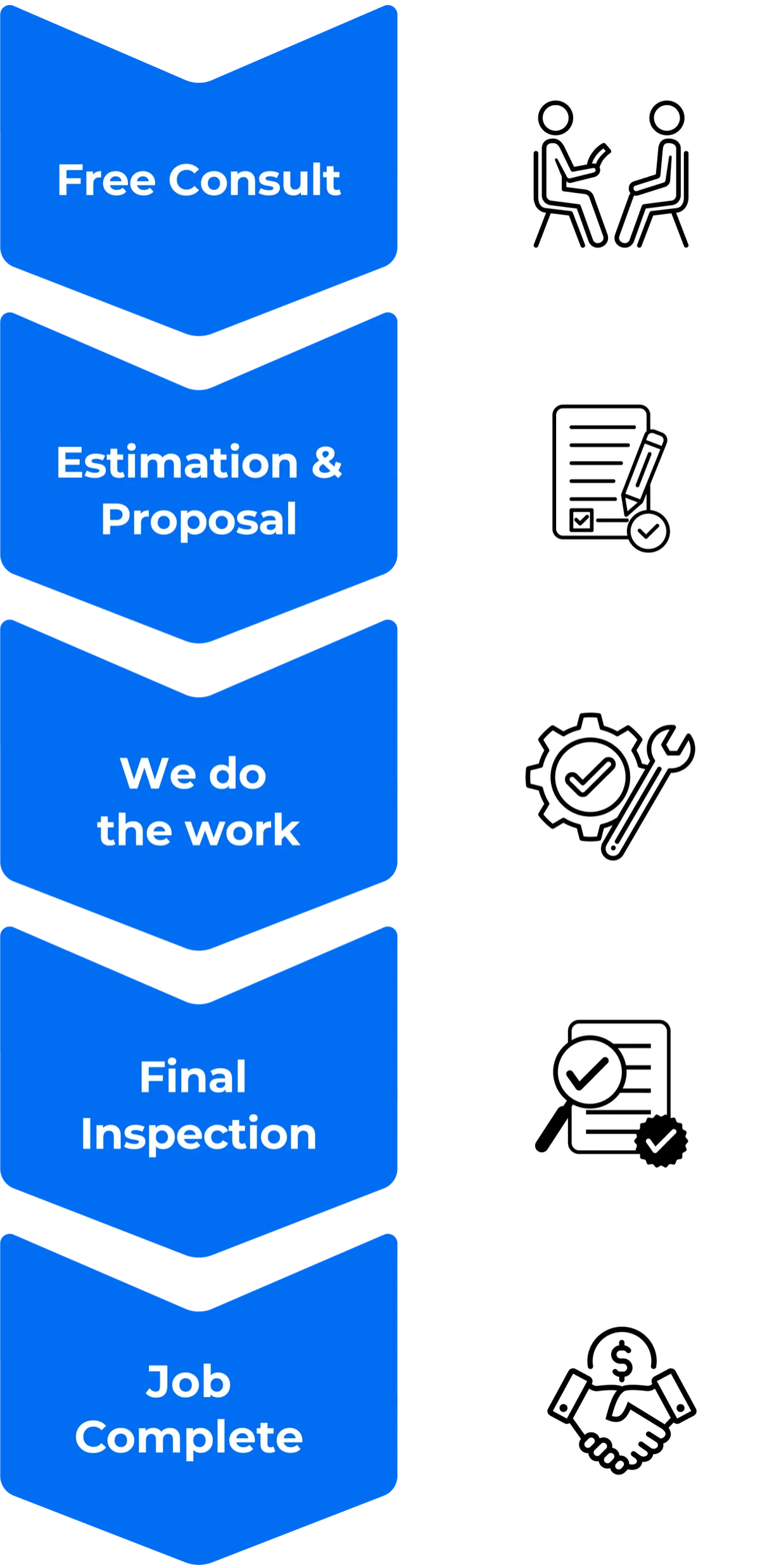
our process
Our process is simple and only contains a few simple steps

SERVICE AREAS
proudly serving Liverpool

READY TO take the next step?
get a free quote TODAY!
Tile and Concrete Polishing Professional
145 Kendall Drive, Casula NSW 2170